
Before Your Next Goal
Pausing for a second

I recently found out I won FKT of the Year.
It’s something I had never really thought about, let alone expected. And while I think it’s cool, it certainly was never a goal or thought (BUT incoming). But recognition has a funny way of creating a pause. Not a victory lap pause, more of a “zoom out and take stock” pause. When you’re constantly moving from one goal to the next, reflection usually gets pushed aside because there is always the next thing waiting. But the Appalachian Trail FKT was a decades-long goal, so more reflection was in order. And, whether it is a belt buckle, terminus photo, or dream achieved, I thought this was a good time to write something that may be applicable to others.
After the AT, I have sat with a big question and wanted to throw it out there for anyone reading this too:
Why do we do this in the first place?
*and your ‘this’ can be anything
Why So Many of Us End Up Here
Most people don’t get into endurance sports because everything in their life is going perfectly.
They get into them because something feels off or they are missing something. It could be as simple as needing a big goal or challenge.
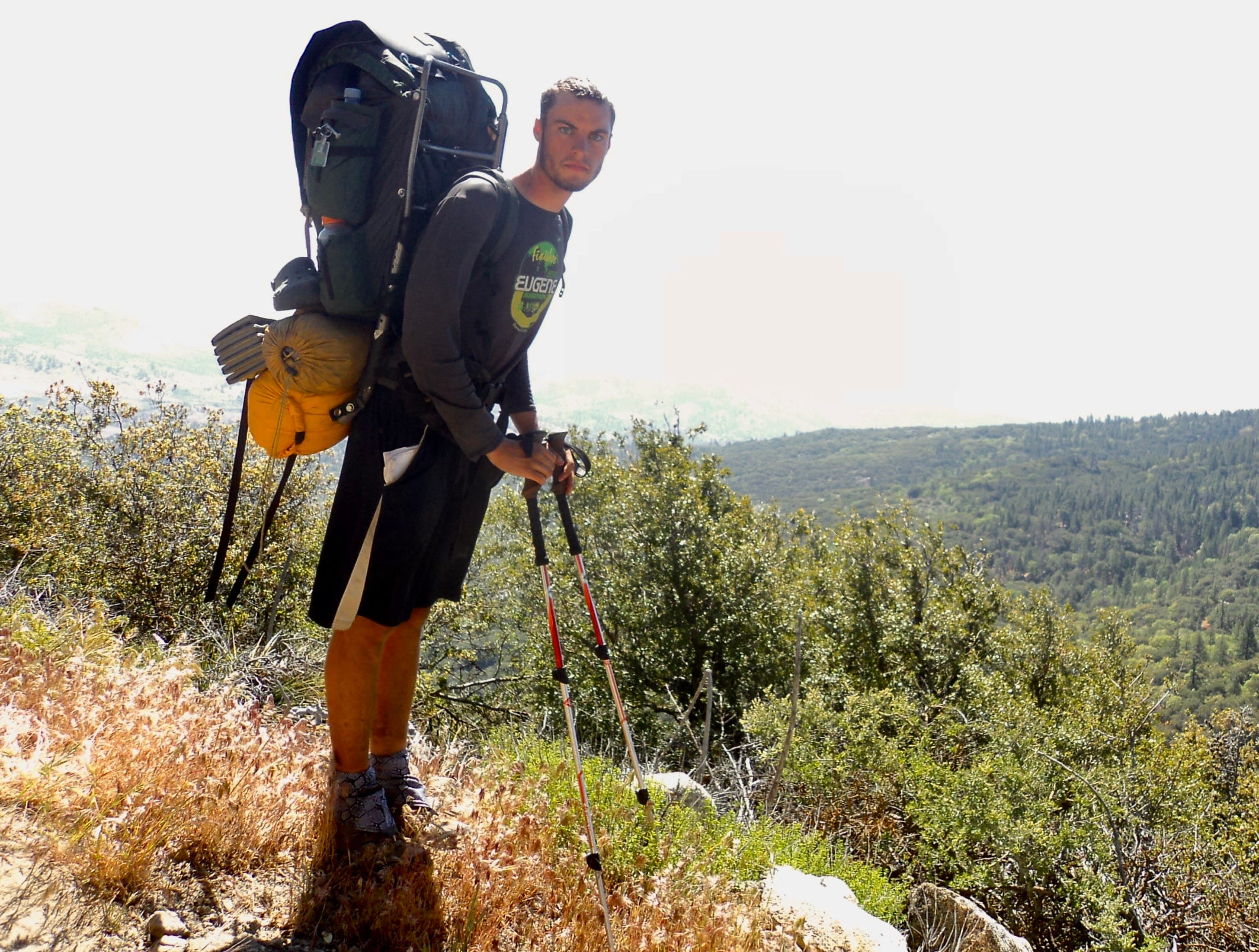
Or maybe it’s anxiety, grief, addiction, restlessness, or just a vague sense that life isn’t lining up the way it should. For me, it was feeling lost and disconnected (beginning in college). I didn’t have language for it at the time, and I also didn’t know I was entering a world (and life) of endurance sports. I just knew that hiking the Pacific Crest Trail at 20 years old felt like the only thing that made sense.
Big goals are good at giving you something clean to hold onto.
You show up. You do the work. At the end of the day, you have a measurable amount of progress. You have proof that you did something productive. In a noisy world where everything feels abstract and overwhelming, that kind of clarity is powerful. Whether you are hiking or running, you moved a measurable amount.
And for a while, it works. Really well.
Why Endurance Works So Well
The miles quiet the noise. The routine gives structure. Physical effort feels like meaning.
Even on days where nothing else happens, you got your miles in. You made progress. And that feels like enough!
Endurance also gives identity and community. You’re not just lost or confused anymore. You’re a runner. A hiker. An ultrarunner. A thru-hiker. There’s a label and a group that comes with it, and that matters more than we like to admit.
None of this is bad. In fact, it’s incredibly powerful and important.
The problem isn’t that endurance goals work.
The problem is expecting them to work the same way forever.
When the Miles Stop Working
If you stay in this endurance niche world long enough, something strange starts to happen.
The miles stop fixing the thing you thought they were fixing.
Not because you got injured. Not because the goal got harder. Not because life fell apart.
They just stop working the same way.
Nobody really prepares you for that moment, because endurance culture is built on escalation. If something isn’t working, the answer is usually more.
If the marathon didn’t fix it, maybe the ultra will. If the ultra didn’t fix it, maybe try running a hundred miles. If one trail didn’t fix it, maybe three in a year will.
This isn’t arrogance. It’s hope. Hope that the next goal will finally be big enough to quiet whatever keeps following you.
What Endurance Can’t Fix
Endurance doesn’t actually fix most of the things we ask it to fix.
It doesn’t resolve identity. It gives you a role that works until you step away from it.
It doesn’t heal trauma or grief. It can mute them, sometimes for years.
It doesn’t fix relationships. Sometimes it replaces them.
It doesn’t create meaning. It creates movement.
That doesn’t mean endurance is bad. Far from it.
Endurance is an incredible container. It gives structure when life feels chaotic. It teaches discomfort and tolerance. It builds community. It can keep people alive through dark seasons. I know it did for me.
But it is not a cure.
If you stop training and everything falls apart, that doesn’t mean training failed you. It just means it was carrying more weight than it was ever meant to carry. Endurance sports are a part of the puzzle, not the entire puzzle.
When the Goal Stops Pulling You Forward
This is usually where another shift happens. Not injury. Not burnout. Something quieter.
The goal stops working the same way.
You’re still capable. You’re still disciplined. On paper, everything looks fine. But the goal doesn’t pull you forward with the same intensity anymore. Training starts to feel performative, like you’re playing a role you used to believe in.
This isn’t laziness.
It isn’t weakness.
It isn’t a lack of toughness.
It’s emotional expiration.
The goal solved a problem you had at the time. And now you have changed or that problem has changed, but you are still using the same goals in the same way.
Coming Back Changed
I’ve felt this after long trails, FKTs, Ultramarathons, the Calendar Year Triple Crown, and the Great Western Loop.
You go into these experiences as one person and come out as another. You’ve had so much uninterrupted time with yourself. You’ve learned things. You’ve changed.
But the world you return to hasn’t.
That’s where the tension lives. Do you keep chasing the same goals because they once worked, or do you stop long enough to ask what actually fits now?
There’s a lot of pressure in endurance sports to always push through. To finish no matter what. To equate quitting with failure.
But quitting isn’t the opposite of discipline. Sometimes it’s the result of it.
The harder thing isn’t stopping.
It’s admitting you’ve changed.
What I Took Forward
After the Calendar Year Triple Crown, I didn’t want more disconnected achievements. I wanted depth. I wanted immersion. I wanted to understand why I loved being out there, not just prove that I could keep going.
That realization shaped everything that came next. The Great Western Loop. Running. FKTs.
Then the pandemic forced everything to stop. No next goal. No clean progression. Just quiet.
With all my goals gone, I took a job at a grocery store. I camped on my days off. I stopped posting. I started therapy. I took the tools I was learning into the outdoors and actually sat with them instead of running from them.
What I found wasn’t a need for a bigger goal. I found some clarity.
I don’t love endurance because it makes me impressive.
I love it because of how it makes me feel while doing it.
The curiosity. The learning curve. The community. The movement. The fear. The excitement.
The goals can look the same, but the meaning behind the same goals is different. I am different.
Before Your Next Goal
Doing something to prove you’re not afraid is different than doing something because you love it.
Going on a roller coaster to show you can handle it is different than going on one because you genuinely enjoy it.
Before setting your next goal, it’s worth asking a few honest questions.
What part of this do I actually love, even if nobody sees it?
What am I hoping this goal will give me?
If this disappeared tomorrow, what lessons would I keep from the process of chasing it?
You don’t have to change anything. You don’t have to quit. You don’t have to stop chasing hard things.
Just pause for a moment.
Endurance will always be there. Goals will always be there.
The question is whether they’re still serving you, or whether you’re afraid of who you might be without them.
That’s all this is.
A pause. Before the next goal.
I did a whole podcast on this topic if you are further curious
Your closing question is exactly the one I'm wrestling with. I checked off the last of my bucket-list running events last summer (Hardrock), took that momentary pause, and 6 months later I'm still trying to answer that question (is it still serving me, and what would I become without it). Finding a new challenge is easy — there's always something harder or longer or more extreme. But finding something that stokes the necessary passion is a different thing. Right now I'm still running, but I'm on autopilot, waiting patiently and expectantly for clarity and a new inspiration.
You summed it up very well. Besides being an excellent ultra athlete you are also an esquisit writer and philosopher.